1. To give children a chance to make their own choices.
2. To allow children to work at their own rate of speed.
3. To provide a wide variety of activities for the children to complete.
4. To include both small group activities and individual activities.
5. To provide activities that meet the varying abilities of the students.
6. To give children a chance to work independently.
7. To encourage children to try new things.
My
students work in Literacy
Groups independently
for about an hour each day.
During this time, I pull students for small group reading
instruction.
For the first month of school, I introduce all of the stations and
explain the station rotation.

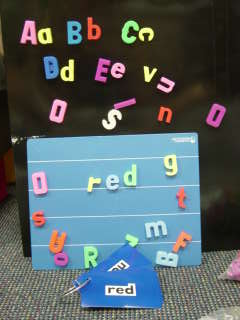
ABC Magnets-There are individual magnet boards for the students to use. They can also use the filing cabinets, the large white magnetic board, or even cookie sheets. I have various types of magnetic letters to use and magnetic words for building sentences. Students can begin by practicing spelling their friend's names using our word wall. Sight word rings are in the station for making sight words. They can match capital to lowercase letters or put the letters in ABC order.
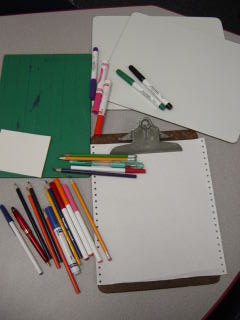
Write the Room-I have clipboards, dry erase boards, and patterned paper for the children to write on. They copy words that are displayed around the room on posters, charts, word wall, and on books. A variety of writing materials (pencils, colored pencils, markers, gel pens, paper, note pads) are available for use in this station.
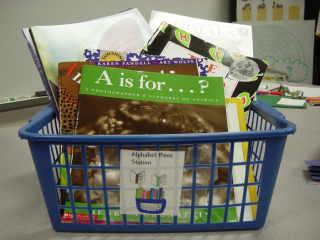
Alphabet Books-All of my alphabet books are put in a reading tub for reading and for practicing the alphabet.
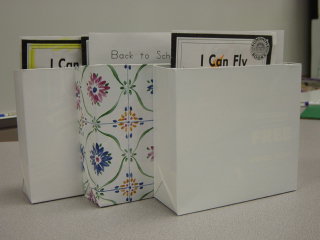
Book Boxes-Each student has their own book box that holds their books that we make at school and our poetry notebooks. Book boxes also hold a copy of the shared reading book for the week.
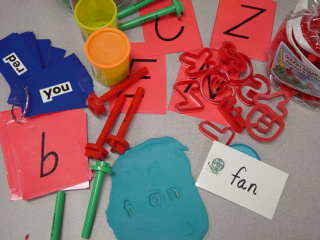
Playdough-Playdough cookie cutters, playdough letter stampers, and laminated letters cards are all used in this fun station. Sight word rings and picture word cards are available for making words. Laminated letter cards are used to form the letters by making snakes with playdough and putting it on the letters.
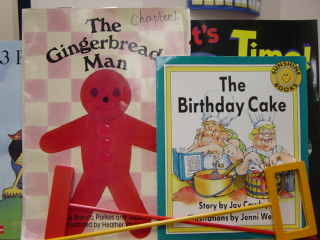
Big Books-I have a wide selection of big books that the students can read using pointers. They can read with a partner or on their own. Word wands and pointers are used to focus on sight words.
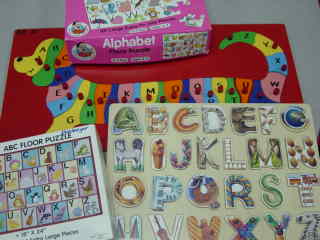
ABC Puzzles-Alphabet puzzles, ABC floor puzzles, teacher made word puzzles (sentence strips cut into puzzles).
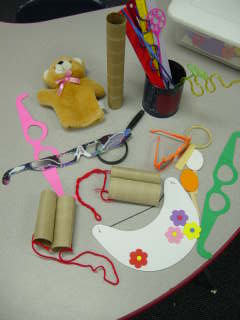
Read the Room-Many types of pointers are used to read print in the room. The students go around the room reading words they know. I also have funny glasses, theme related masks, magnifying glasses, toilet paper binoculars, and paper towel telescopes that can be used while reading the room. Many of my pointers are made with dowel sticks and craft foam cut outs.
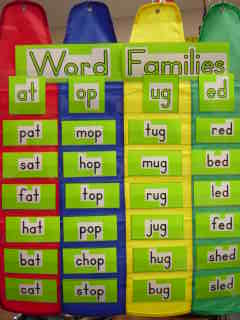
Word
Families-
The students make word family words using a pocket chart in the
classroom. Word family words are words that end with the same sounds.
Many of these words will be easy for your child to sound out at home
and at school.
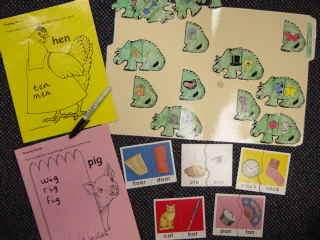
Rhyming-Students can match objects that rhyme, pictures that rhyme, sing nursery rhymes, and brainstorm words that rhyme with a given word. Rhyming puzzles and file folder games are also included in this station.
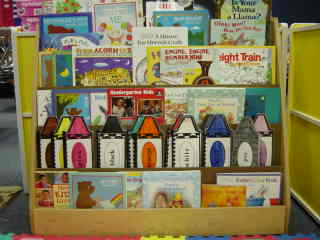
Independent
Reading-The
students go to the Library Center and choose a favorite book to read
alone. (Our Alphabet/ABC books are also found in this reading center.)
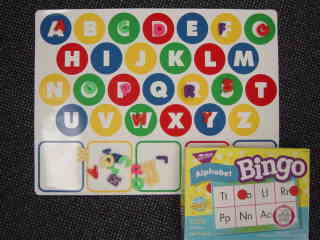
ABC Games-Students love to play Bingo! Alphabet Bingo is a great way to learn the letters of the alphabet. One student can be the caller and the others play the game. Alphabet Sort helps students with visual discrimination by sorts through colored letters and putting them on the correct letter.
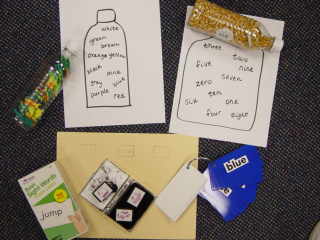
Sight Words -Sight word rings can be used as a word deck for calling out the sight words. There are sight word stamps to match with the cards. Sight word bottles (discovery bottles) include color and number words. The students must find a word in the bottle and highlight the word on a ditto sheet.
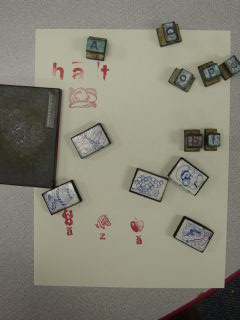
Stamps-There are alphabet stamps, picture stamps, and sound stamps. The students can stamp out names, sight words, and make stories for the picture stamps. They can stamp the letters in ABC order or stamp a capital letter and the matching lowercase letter.
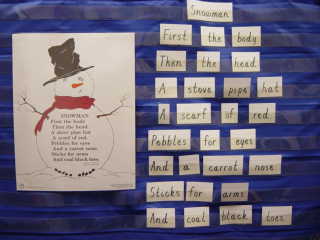
Pocket Charts-I have many pocket charts in the classroom for the children to use. We use poems, chants, language experience stories, and rhymes in pocket charts. I write the rhyme on sentence strips, cut up the words, and put them in Ziploc bags by lines. The students must put the rhymes back together by matching the words to the rhyme.
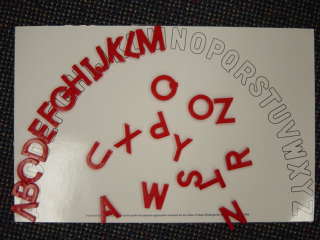
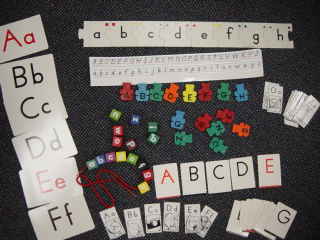
Alphabet-Students put flash cards of the alphabet in order. This can be done on the floor or on a pocket chart. Alphabet strips are put in this station for a visual check. Letter arcs are used for putting the alphabet in order. The students can string letter blocks in order. You can also find letter arcs and plastic letters from Nixon Education Services. http://www.alphabetmats.com/
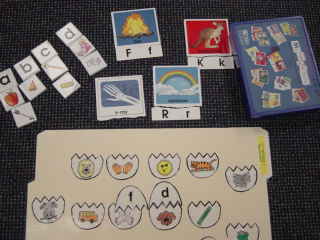
Beginning Sounds-Alpha-tiles, file folder games, and sound tubs are all good for learning beginning sounds of the letters.
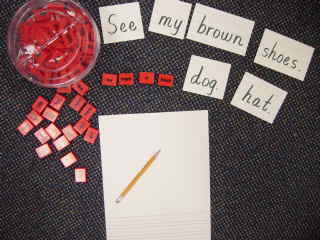
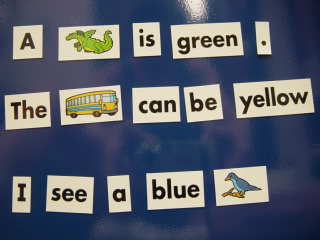
Build a Sentence-I have laminated words that make a simple sentence in Ziploc bags. The students make the sentence and then record it on paper and then illustrate their sentence.